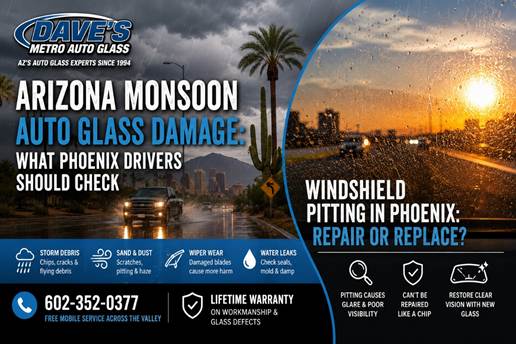
A windshield does not need a long crack to become difficult to see through. Years of Phoenix freeway driving can leave thousands of tiny marks across the glass. This condition is commonly called windshield pitting or sandblasting.
Each pit may be too small to attract attention on its own. Together, they scatter sunlight and headlights, create glare and make the windshield look hazy. The question is whether the surface can be improved or the glass needs replacement.
What Causes Windshield Pitting?
Small particles of sand, gravel and road debris strike the windshield while a vehicle is moving. The impacts remove minute pieces of the outer glass surface. Drivers who spend time behind trucks, travel through construction zones or use high speed freeways may notice the effect sooner.
Arizona dust adds another source of abrasion. Grit trapped beneath a worn wiper blade can be dragged repeatedly across the windshield. Dry wiping a dusty surface has a similar effect.
Pitting develops gradually. Many drivers first notice it when driving toward the rising or setting sun, or when approaching headlights create a field of bright points at night.
Pitting Is Different From a Chip
A chip is a localized impact point. Depending on its size, depth and position, a technician may be able to fill it with repair resin. Pitting is spread over a larger area and may involve hundreds or thousands of shallow marks.
Repair resin cannot be applied across an entire windshield in the same way it is used for one rock chip. Surface polishing may improve minor mineral deposits or light wiper marks, but it cannot rebuild glass that has been physically removed by repeated impacts.
An inspection should separate true pitting from residue, hard water spots, sap, overspray or scratches. Those problems may respond to cleaning or professional polishing.
Test Visibility in Real Driving Conditions
A windshield may look acceptable inside a garage and become troublesome on the road. Check it in several lighting conditions without taking unnecessary risks.
Notice whether low sun creates a white haze across the driver’s field of view. At night, look for excessive halos around headlights and streetlights. During rain, watch whether reflections and scattered light make lane markings harder to follow.
Clean the inside and outside surfaces first. Interior film can build slowly and produce glare that resembles damaged glass. Use clean microfiber cloths and an automotive glass cleaner, then reassess the view.
When Replacement Becomes the Better Choice
Widespread pitting cannot usually be addressed with a standard chip repair. Replacement may be appropriate when glare interferes with clear vision, the driver struggles to see lane markings, or the damage is concentrated in the main viewing area.
Cracks, edge damage or several larger chips can strengthen the case for replacement. Modern vehicles may also have cameras, sensors, acoustic glass, tint bands or other features that must be matched when the correct replacement windshield is selected.
The goal is not to replace glass because it has a few harmless marks. It is to restore a clear, dependable view when accumulated damage is affecting normal driving.
How to Slow Future Pitting
Leave more space behind gravel trucks and construction vehicles. Avoid using the wipers on dry dust. Rinse the windshield first and keep the washer reservoir filled with the correct fluid.
Clean the wiper blades regularly and replace them when the rubber becomes hard, split or uneven. A blade that skips or drags can trap grit against the glass.
Parking away from active landscaping and construction dust may also help. No method will prevent every impact on Phoenix roads, but sensible habits can reduce avoidable abrasion.
Get a Windshield Inspection From Dave’s Metro Auto Glass
Dave’s Metro Auto Glass has served Phoenix drivers since 1994 and provides windshield repair, replacement and free Valley wide mobile service. The team can determine whether poor visibility is caused by removable contamination, repairable damage or widespread pitting that calls for new glass. Call 602-352-0377 for a free quote and help choosing the correct windshield for your vehicle.
References
Dave’s Metro Auto Glass: Windshield Repair and Replacement
Dave’s Metro Auto Glass: Automotive Glass Services
Auto Glass Direct: Windshield Sand Pitting