
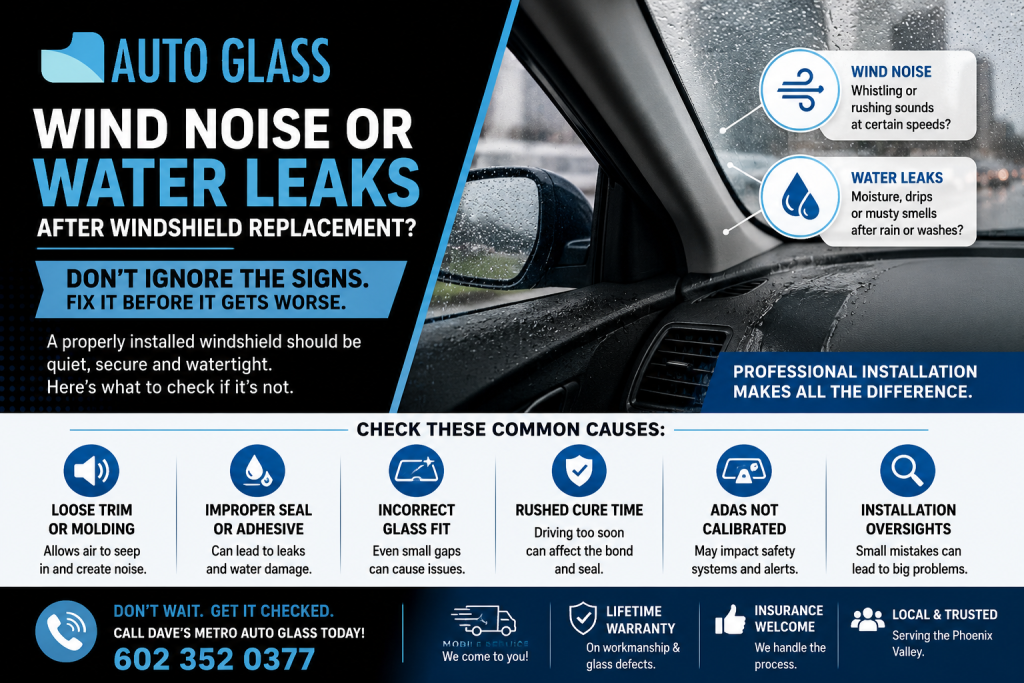
Wind Noise or Water Leaks After Windshield Replacement: What to Check
A replacement windshield should feel like part of the vehicle, not a new source of noise or moisture. After the adhesive has cured and the car is back in normal use, the glass should sit evenly, the exterior trim should remain secure and the cabin should stay dry. Visible gaps, persistent wind noise, water entry and loose trim can indicate that an inspection is needed.
A faint sound can be difficult to locate, particularly at highway speed. Water may also travel behind trim before appearing on the dashboard or carpet. Knowing what to observe helps a Phoenix driver describe the problem clearly and return to the installer before a small concern becomes interior damage.
Respect the Minimum Drive Away Time
The adhesive needs time to develop a safe bond between the glass and vehicle. The required minimum drive away time depends on the adhesive, temperature, humidity and other installation conditions.
Follow the specific time given by the technician rather than a general rule found online. Avoid driving early simply because the windshield appears secure. Also follow the shop’s instructions about car washes, tape, doors and other aftercare while the installation settles.
Listen for New Wind Noise
Test the vehicle on a familiar road after the approved waiting period. A new whistle, rushing sound or flutter that changes with speed may come from molding, trim, a gap or the position of the glass.
Before blaming the windshield, check that a window is fully closed and that roof racks or loose exterior items are not creating the sound. Note the speed at which it begins and whether it seems louder from the driver side, passenger side, top or lower corner. That information is more useful to the installer than saying the vehicle is simply noisy.
Look for Water in More Than One Place
A windshield leak may show as a visible drip, but it can also appear as damp carpeting, moisture near the pillars, a wet headliner or a musty smell after rain. Water can follow hidden paths, so the place where it becomes visible is not always the point where it entered.
Take photographs before drying the area. Record whether the moisture appeared during rain, a car wash or after the vehicle had been parked. Contact the glass shop promptly because repeated moisture can affect upholstery, wiring and interior materials.
Do not use a high pressure hose directly against fresh molding to test the seal. Let the installer choose an appropriate inspection method.
Inspect the Trim and Glass Position
Walk around the windshield in daylight. The glass should appear evenly positioned, with trim and moldings seated consistently around the opening. Look for lifted corners, loose pieces, visible gaps or fresh adhesive where it should not be exposed.
Inside the car, check the mirror cover, camera housing, inspection items and any panels that were removed during the work. A loose piece may create a rattle that sounds like a glass problem.
Do not push tools beneath the molding or pull at a loose section. Photograph it and ask the installer to examine it.
Pay Attention to Safety Features
A vehicle with a windshield mounted camera may require calibration after replacement. Watch for dashboard warnings and confirm that the final invoice shows any required calibration.
Even without a warning light, mention changes in lane assistance, automatic emergency braking alerts, rain sensing wipers or head up display clarity. The absence of a dashboard message does not prove that every feature has been checked correctly.
Avoid Household Sealants
Trying to stop a leak with household silicone can make professional diagnosis and repair more difficult. The automotive glass standard specifies compatible polyurethane when sealing leaks in a polyurethane retention system and states that silicone or butyl should not be used for that repair.
A leak may result from the adhesive bond, glass position, body opening, molding or another nearby source. It should be diagnosed before additional material is applied.
Use the Workmanship Warranty
Keep the invoice and review the shop’s warranty. Explain when the problem started, where it appears and whether it changes with speed or weather. A reputable installer should have the opportunity to inspect its work.
Dave’s Metro Auto Glass provides windshield and auto glass replacement at its Phoenix shop and through mobile service across the Valley. The company backs workmanship and glass defects with a lifetime warranty guarantee. If a replacement develops persistent wind noise, a suspected water leak, loose trim or another installation concern, call 602 352 0377 and arrange an inspection.
References
Dave’s Metro Mobile Windshield Replacement
Auto Glass Safety Council Minimum Drive Away Times
ANSI Auto Glass Replacement Safety Standard